Eight months have passed since I came to this land. Although this is not my first time to be on this land, I cannot ignore the fact that I have learnt many things about this land. I realized that I was kind of blindfolded when I had my life in this country the last two times. I thought I knew this world but, when I think about it now, I did not know much about it. In a way, I was arrogant about my knowledge.
So, I can say that this is my very fist time to stand on my own feet on this land. Although I have to admit that I might not have been this successful if I were alone, in the end of my stay I will be able to say that I know this world!
There are not always good things when I move into different places especially when I do in different countries. There is always a thing that I try to tell myself not to do; do not compare.
Yes, if I compare things here with things there, such as my own homeland, of course, there are more complains than positives. In fact, I actually tend to like different things that I have never experienced. I like discovering things that have not been around me before. I feel as if I became a small explorer.
Here are things I like about Oz or Melb:
Working Conditions I think working conditions here are quite good and protected by Fare Work Australia. For example, maximum working hours for full-time workers are 38 hours per week, which means 7.6 hours per day. Employees are entitled to take different types of paid leave, such as annual leave, personal/carer’s leave, parental leave, community service leave and long service leave. Australia has 8 public holidays a year. The minimum wage is AU$15.51 per hour (AU$589.30/week). Unlike Japan and U.S.A., every employee works under a contract, even full-time employees. A contract is reviewed and extended yearly or every two years depending on the type of position. A new employee usually has a three-month probation period and is reviewed by his direct supervisor. A contract should be flexible for people who have dependents and/or family or is taking some studies. This flexibility should not be ignored or denied by the employer or supervisors. As mentioned before, there are different types of leaves that I did not really recognise.
Annual leave – 4 – 5 weeks paid
Personal/carer’s leave – 10 days paid
Parental leave – 6 – 12 weeks with minimum pay (AU$596/week)
– Birth-related leave and adoption-related leave
Community service leave – jury service / voluntary emergency management activity (the activity deals with an emergency or natural disaster; the employee engages in the activity on a voluntary basis; the employee is a member of, or has a member-like association with, a ‘recognised emergency management body’; the body requests the employee to engage in the activity, or it would be reasonable to expect that such a request would have been made if circumstances had permitted.)
Long service leave – generally be taken after 10 years continuous service for the same business. The amount of days depends on a service.
The paid holidays can also be cashed out if the employee is not able to use it.
I really like these protected employee’s rights. It is also great what they offer to single parents who are Australian citizens or have a permanent resident visa. Unlike in Japan, single parents can actually support themselves and child(ren) without depending on their parents. Not only single parents, but other people can actually get many benefits from the government as well.
Parenting Payment :
– A single parent can receive a basic rate of up to AU$625.90 per fortnight.
– A partnered parent can receive a basic rate of up to AU$428.70 per fortnight.
– A partnered parent but separated because of illness, respite care or prison can receive a basic rate of up to AU$513.80 per fortnight.
Pharmaceutical Allowance :
– A single parent can receive AU$6.- per fortnight.
Advanced Payment :
A lump sum Advance Payment of Social Security is available if a single need some money to help pay his expenses. The amount of the advance is limited by minimum and maximum amounts which are determined by the type and rate of payment a single parent receives.
Carer Allowance :
Carer Allowance (caring for a child under 16 years) is a supplementary payment that may be available if a single or partnered parent provides additional care and attention on a daily basis for a child aged under 16 years with a physical, intellectual or psychiatric disability or medical condition. A parent can receive AU$110.- fortnightly plus health care card for a child.
Education Entry Payment :
A payment to help a partnered parent to return to study.
A Health Care Card :
A health care card which entitles people to cheaper medicines and some other concessions.
Remote Area Allowance :
Remote Area Allowance gives people extra financial help if he is getting an income support payment and he lives in a remote area.
Rent Assistance :
Rent Assistance gives people with a few conditions extra help if they rent privately. For example, a single parent with one or two children can get a maximum payment AU$136.78 per fortnight.
Child Care Benefit :
Child Care Benefit helps parent(s) with the cost of child care for long day care, family day care, occasional care, outside school hours care, vacation care and registered care.
Telephone Allowance :
Telephone Allowance helps a single/partnered parent or people with a few conditions with the costs of a telephone and home internet service. This is a payment to assist with maintaining a telephone service, not for calls.
Newstart Allowance :
For unemployed people, Newstart Allowance provides financial support while they are looking for work. For example, a single parent with dependent child or children can receive AU$513.80 per fortnightly.
Training Supplement :
People with parenting payment or newstart allowance can receive AU$41.60 per fortnight with compulsory participation requirements who commence approved courses during particular periods.
There are more benefits which makes me like Australia more….. (see centerlink website)
Diversity of Cuisine
Not only do I like the working conditions, I also enjoy the diversity of cuisine available here.
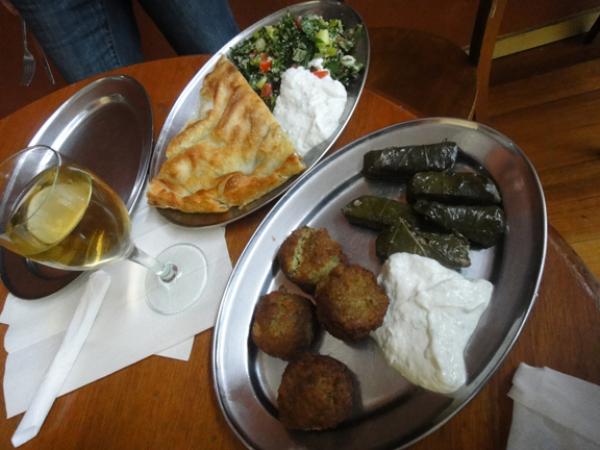
For someone like me, it is such a great thing that I can taste different types of food without making any hassle. Like the U.S.A., there are little Italy, Vietnam, Greece, Turkey, China, and little tiny Japan, etc.
Residents from more than 140 nations live side by side in Melbourne, brought here by four main waves of migration; the first wave was a European settlement in the 1830s by mostly Anglo-Celtic people who displaced the area’s original inhabitants, the people of the Kulin nation; the second was a flood of hopefuls from all over the world trying their luck during the 1850s Gold Rush. This lead to further Aboriginal dispossessions, especially inland from the early Melbourne settlement. The influx saw the arrival of significant numbers of Chinese; the third wave was post-WWII refugees and displaced people from Europe as well as assisted migrants to bolster Australia’s population. By 1976, 20 per cent of the city’s population spoke a non-English first language. The fourth significant wave came post-1970s, with migration from Vietnam and Cambodia. Melbourne has the largest Jewish population in Australia, the community currently numbering approximately 60,000. The city is also home to the largest number of Holocaust survivors of any Australian city, indeed the highest per capita concentration outside Israel itself. (See more : City of Melbourne 2006 Multicultural Community Demographic Profile)
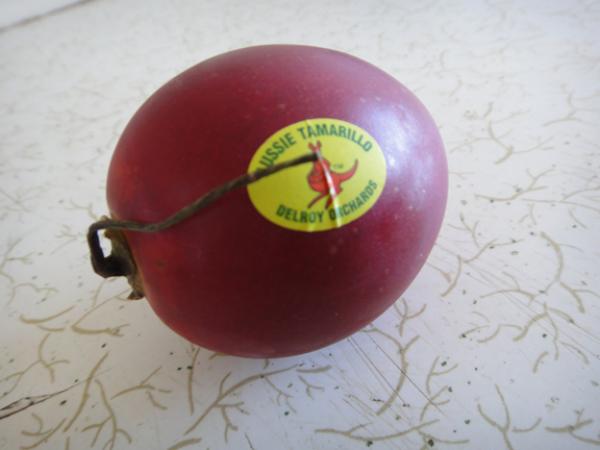
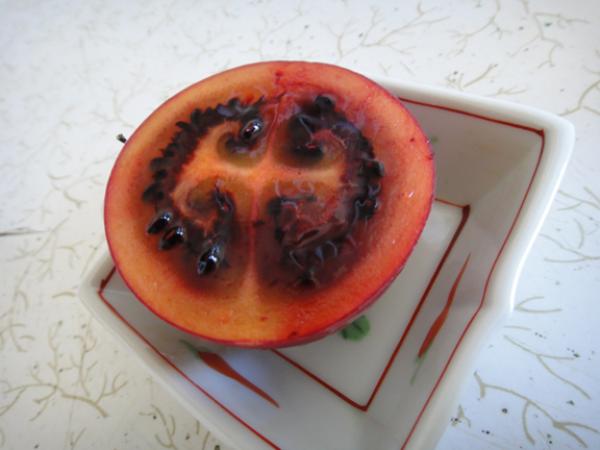
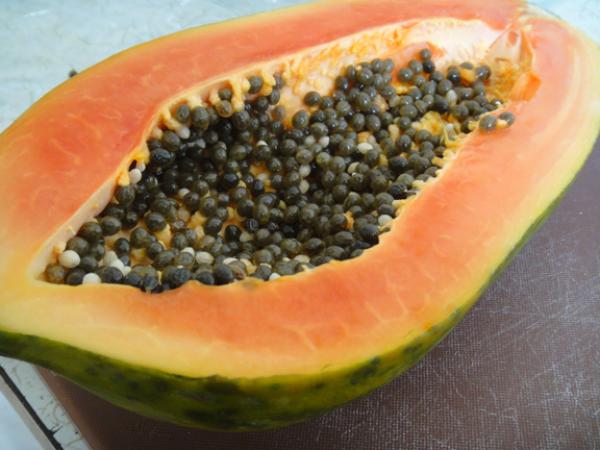
I also appreciate variety of food and spices that are available in many places. I especially appreciate the fact that I can buy cheese with reasonable and affordable prices. Most vegetables and fruits sold very fresh. Oh, yes, there are so many different kinds of fruits here too. This makes me feel as if nothing is impossible to cook!
Café Culture :
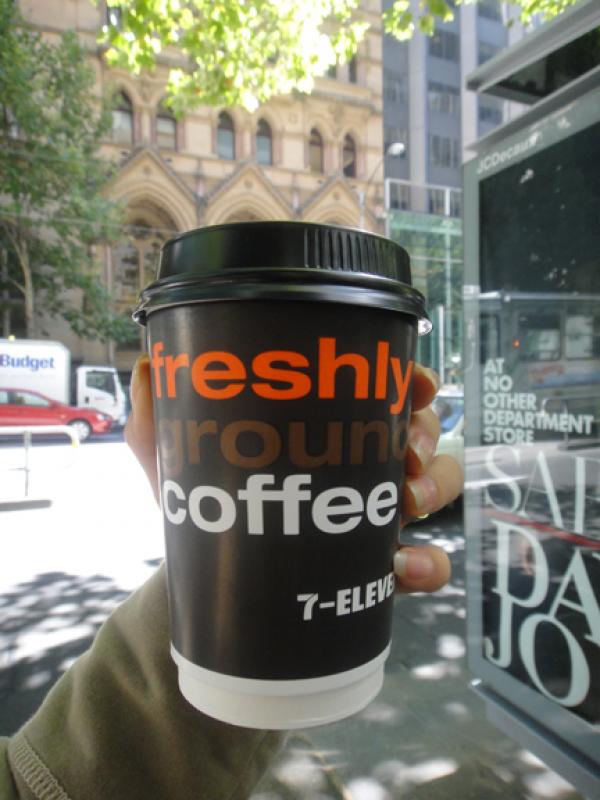
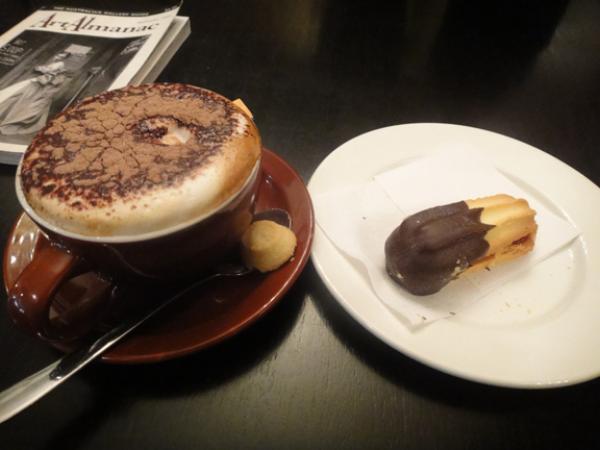
Melbourne has a good café culture as well as art especially graffiti. There are always some kinds of arts on each block, which somehow seem to be protected by the city.
Trading hours :
Shops here close quite earlier than you may expect. Opening and closing times depend on state regulations but most shops in Melbourne are open from 9:30am to 6pm Monday to Wednesday, Friday and Saturday, and until 9pm on Thursday. Sunday trading in Melbourne is becoming increasingly popular, although the opening hours tend to be shorter than the rest of the week, with shops closing at around 4pm or 5pm. Small retailers usually close on Sundays.
This makes people spend more time at home, at parks or at events. For someone like me who enjoys staying home at night, this forces me to stay home to relax and prepare for the next day.
Events :
Even though shops close early on Saturday or close on the weekend in Melbourne. There are always some events going on in the city or surrounded areas. The City of Melbourne surely sleeps well, but never be still.
The Flow of Time :
Somehow, I feel time flows quietly here. It may be because night comes early since shops close early and people tend to go home early. I like this flow of time. Yet, I think this must be too slow for teenagers.
Less Pressure :
Due to the above elements, I feel less pressure. Sometimes I do not know what to do because I am less pressured. It is very funny to feel this way. It may be because I was always in a hurry or under some kind of pressure before. I hope I do not pressure myself because I unconsciously miss it.
Flexibility :
People are quite flexible here. Some can make some exceptions especially for you. They also tend to act friendly. In different words, if you are lucky, you will get a good deal and able to make things go smoothly.
Although I listed up many good things about here, there are a few things I cannot adjust myself to.
First, it is a very poor customer service. A long time ago, I read an article about poor customer service in China. Before a Japanese department store company opened its branch in China, they had to spend a lot of time training staff for better customer service. I remember the article said that they struggled a lot since giving a good customer service did not exist in China back then. When I went to China and Taiwan a few years ago, it was very noticeable that they did not know how to treat customers. But, I did not think much about it. When I went to Scandinavia, Europe and America, I noticed that customer service is bit different from it in Japan, but I had never really questioned or even complained.
However, here I am stuck at one position with one simple question; why there is no simple structure in customer service.
It seems to me that there is no words, customer service, in a dictionary here.
[youtube Jwekc5qgVeA]
You may have to win a lottery to get good (not a great) customer service.
Now, I realized how important it is to have a good customer service, which saves me time in the end. I now appreciate more the service I had in Japan.
I may have been just unlucky with the service or I may have been spoiled while living in Japan. Yet, I probably won’t change my opinion on this even if I would live here forever.
Second, as I mentioned above, it is about flexibility. It is good but bad at the same time. When it becomes a bad element, it annoys me so much. In other words, there is no fundamental unity. I can get both ‘yes’ and ‘no’ answers to the same question or request when I ask people at stores, etc. I now tend to think that one ‘yes’ does not mean it is always ‘yes.’
Third, I find people here hate making an apology. People tend to make an excuse or blame someone else for their mistakes or incapability. Sometimes just saying ‘thank-you’ makes things go smoothly, they just do not know how to apologise.
Forth, it is very hard to find people who are reliable and responsible. This relates to the second and third mentioned above. They do not take any responsibility for what they said and what they did. They do not seem to take any pride in their jobs or what they do. Or maybe people here are too laid back?
Finally (hopefully), packaging is quite terrible here. I think packaging companies must try hard to improve the packaging in order to sell more products. Yet, I do not think they are not trying hard. The reason why I think this way is that I am already disappointed when I open new bag, box, or tube of product. For example, I have never got to rip off the tab at the bottom to open the new aluminium foil till the end so that I always have to try and try again to rip off everything.
These are just my thoughts after living in this world for 8 months. I actually would love to find answers to what I fancy the least so that I may be able to have a better understanding about this Down Under.
Read More